
Millennials Aren’t Rejecting Motherhood. They’re Rejecting Martyrdom.
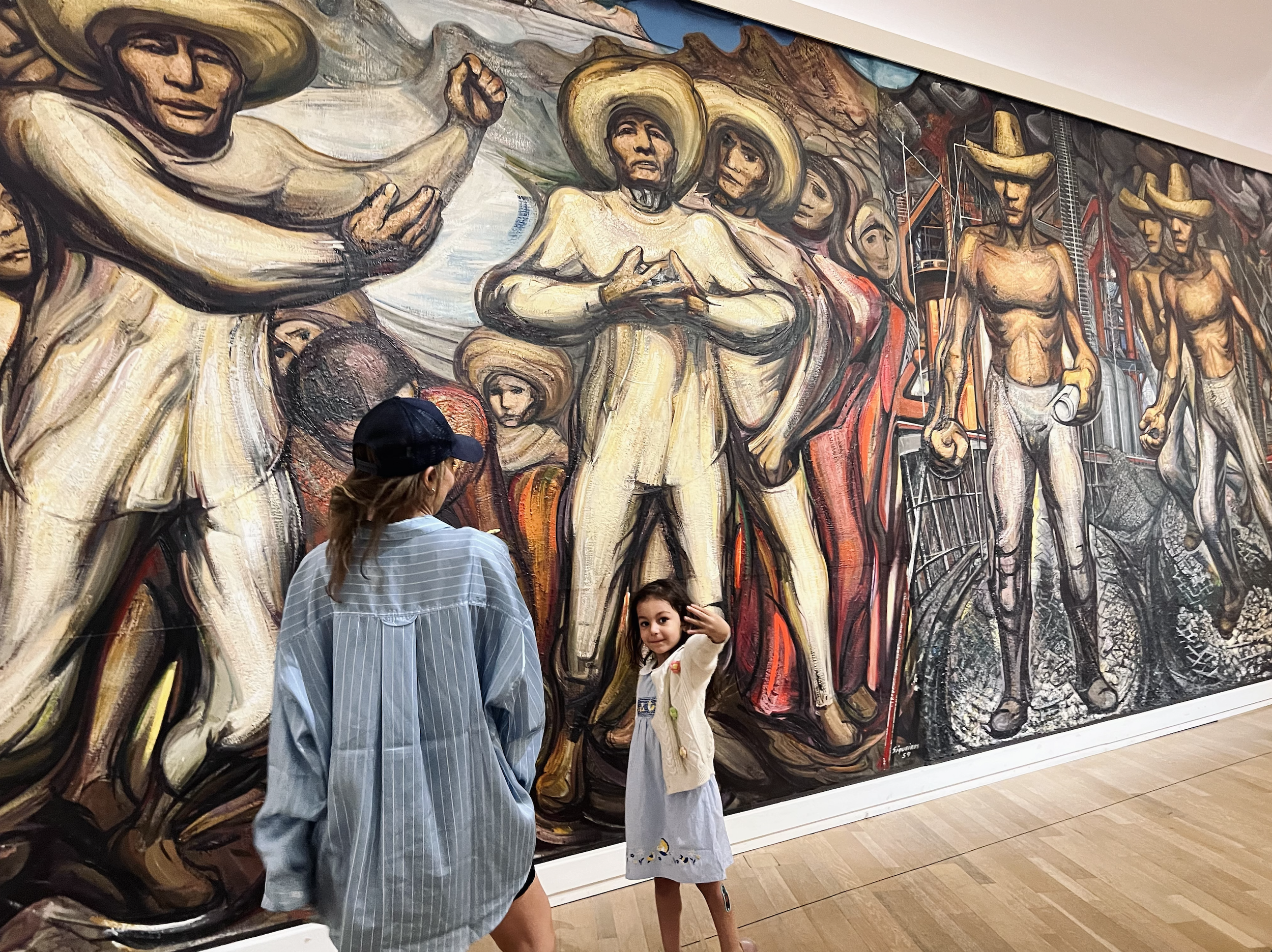
Millennial motherhood isn’t disappearing. It’s transforming.
The Cultural Script of Maternal Martyrdom
I was on my usual walk when a woman I often chat with made an offhand comment.
“Well, once you’re a mother, it’s not about you anymore.”
The strange part wasn’t the sentiment. It was that it had nothing to do with what we were talking about. There was no context for it, no relevance to the conversation. It was simply stated, like gravity. Like something that didn’t need examination.
That’s how cultural scripts survive. Not through debate or enforcement, but through reflex. They surface automatically, even from people who have never lived inside them. The idea that motherhood requires a woman to disappear is so normalized that it often arrives uninvited, unquestioned, and complete.
My Personal Reckoning
When I became a mother, I didn’t question that belief. I lived it.
Not because anyone explicitly demanded it of me, but because it felt like what love was supposed to look like. Putting myself last. Making my needs smaller. Treating depletion as devotion. I wasn’t following instructions so much as embodying a role I had absorbed long before I had language for it.
It nearly broke me.
What I learned the hard way is that martyrdom is not motherhood. It is a myth that survives because women are praised for disappearing. Children don't need self-sacrifice. They need capacity. Presence requires regulation. Regulation requires a self that still exists.
That realization didn’t come easily or quickly. It came through lived experience, exhaustion, and the quiet reckoning that happens when a belief is followed all the way to its conclusion and fails to deliver what it promised.
The Generational Shift
Zooming out, this personal realization mirrors something much larger.
Millennials are often told they’re avoiding parenthood because they’re selfish, immature, or afraid of responsibility. The data usually points to economics: housing costs, childcare, student debt, unstable partnerships. All of that matters, and none of it tells the whole story.
Beneath those reasons is something harder to measure: a generational refusal to disappear.
What We're Really Rejecting
I know women who adore babies, who are nurturing by nature, who are in stable, loving relationships, and who still say no to motherhood. Not because they lack love or desire, but because they are unwilling to lose themselves in order to qualify. What they are rejecting is not care, devotion, or family, but a cultural script that equates goodness with depletion.
This refusal is often misread as selfishness or fear of responsibility. In reality, it reflects a different kind of responsibility, one shaped by awareness. A generation that learned to name trauma, burnout, and emotional limits also learned to recognize when a system asks for more than it gives. For many millennial women, motherhood was not modeled as an expansion of self, but as an erosion of it. Choosing not to participate in that model is not apathy. It is discernment.
This helps explain a paradox many people struggle to understand: women who love children but refuse to become mothers. What they are opting out of is not nurturing, but annihilation. In that sense, delay, redefinition, or refusal is not a collapse of values, but an attempt to protect them. It is a pause long enough to ask whether repeating the past actually serves anyone, and whether love might require something braver than endurance.
Trauma Generation
Millennials are also the first generation to publicly normalize mental health. We named trauma instead of burying it. We stopped pretending burnout was a badge of honor. We learned to say “I’m not okay” without whispering. With that awareness came a new, uncomfortable question previous generations were rarely encouraged to ask: how do you raise a child when you are barely holding yourself together?
For many, choosing not to become a mother wasn't rejection, immaturity, or fear of responsibility. It was restraint. It was the recognition that love requires availability, that presence requires capacity, and that unexamined damage doesn't disappear when a child arrives-it gets passed down. A generation that finally learned to see its own fractures paused, not because it didn't value children, but because it understood the cost of pretending to be whole when it wasn't.
A Generation of Transformation
Only later did I notice that this pattern mirrors how millennials are sometimes described astrologically, as a generation associated with Pluto, the archetype of exposure, dismantling, and transformation. I didn’t arrive at this understanding through astrology. It simply became another lens that unexpectedly confirmed what lived experience and cultural data were already showing.
Millennials inherited systems that were already under strain. Family structures, gender roles, economic promises, and definitions of success were quietly failing long before we were old enough to name it. What made this generation different was not the presence of dysfunction, but the refusal to accept it without question. The instinct was not to preserve appearances, but to interrogate cost. Not to comply automatically, but to ask whether repeating the past actually served anyone.
This is why so many choices that appear contradictory from the outside make perfect sense from within. Delaying parenthood. Redefining it. Refusing it altogether. These are not signs of collapse. They are signs of discernment applied to inherited roles that no longer function as promised.
Two Paths, One Truth
Not everyone responds to a broken system the same way. Some women opt out of motherhood entirely. Others step into it and consciously rewrite the role from the inside. Both responses come from the same place: an unwillingness to disappear.
Choosing to Stay and Rewrite
I chose to stay. But staying did not mean accepting the old script. It meant learning, painfully and slowly, that abandoning oneself eventually damages the very relationships it claims to protect. Becoming a better mother required becoming more whole, not less.
This is where the cultural conversation often fails. We frame motherhood as either total sacrifice or total rejection, leaving no room for nuance. In reality, many women are not rejecting children. They are rejecting annihilation. They are asking for a version of motherhood that allows for presence, capacity, and continuity of self.
That request is not radical. It is corrective.
What Motherhood Actually Needs
Motherhood does not need fewer women. It needs a truer definition.
One that no longer equates goodness with depletion or love with disappearance. One that recognizes that children do not benefit from martyrdom, but from adults who are regulated, resourced, and fully present. One that allows women to choose freely, whether that choice is to become a mother, to wait, to redefine the role, or to walk a different path entirely.
The Act of Responsibility
Millennials did not reject motherhood out of indifference. Many paused, questioned, or refused because they were the first generation encouraged to name trauma, burnout, and emotional limits out loud. Awareness changed the ethics of repetition. And when a role demands silence about its cost, choosing not to inherit it becomes an act of responsibility.
Some of us stayed and rewrote the script. Others declined to perform it at all. Both responses are evidence of the same truth: love does not require self-erasure, and the future does not benefit from pretending otherwise.
What's your experience with this? Have you felt the pressure to choose between motherhood and yourself? Drop a comment below or share, if it resonated—this conversation needs more voices.
